Spain rewards the traveler who goes beyond the obvious itinerary. Yes, Barcelona and Madrid are extraordinary — I'm not going to pretend otherwise. But some of my best Spanish experiences have been in places most international tourists miss: the medieval streets of Salamanca on a rainy Sunday afternoon, the Ribeira Sacra wine region in Galicia, the completely unexpected sophistication of Bilbao. Spain has more geography, more culture, and more food per square kilometre than almost anywhere in Europe.
Best Time to Visit Spain in 2026
Spain's size means its "best time to visit" varies significantly by region:
- March–May (Spring): The finest window for most of Spain — Andalusia's orange blossom, Seville's Feria de Abril (April Fair), the entire country before peak-season prices. Temperatures 18–25°C across the south. Best for cities, culture, and walking.
- June–August (Peak Summer): Mediterranean coast at its best (28–34°C, clear seas). Inland cities like Seville and Córdoba become extremely hot (40–45°C in July–August) — schedule outdoor sightseeing before 11am and after 6pm. Book accommodation 2–4 months ahead using our hotel booking comparison.
- September–October (Shoulder): Equal to spring for cities, still warm enough for beaches in the south, wine harvest season in La Rioja and Ribera del Duero, and Barcelona at its most liveable. The ideal window for a full-country Spain trip.
- November–February (Winter): Madrid's museum circuit at its most uncrowded and comfortable. The Canary Islands (Gran Canaria, Tenerife) maintain 22–25°C year-round. Ski season opens in the Sierra Nevada (Granada) and Pyrenees.
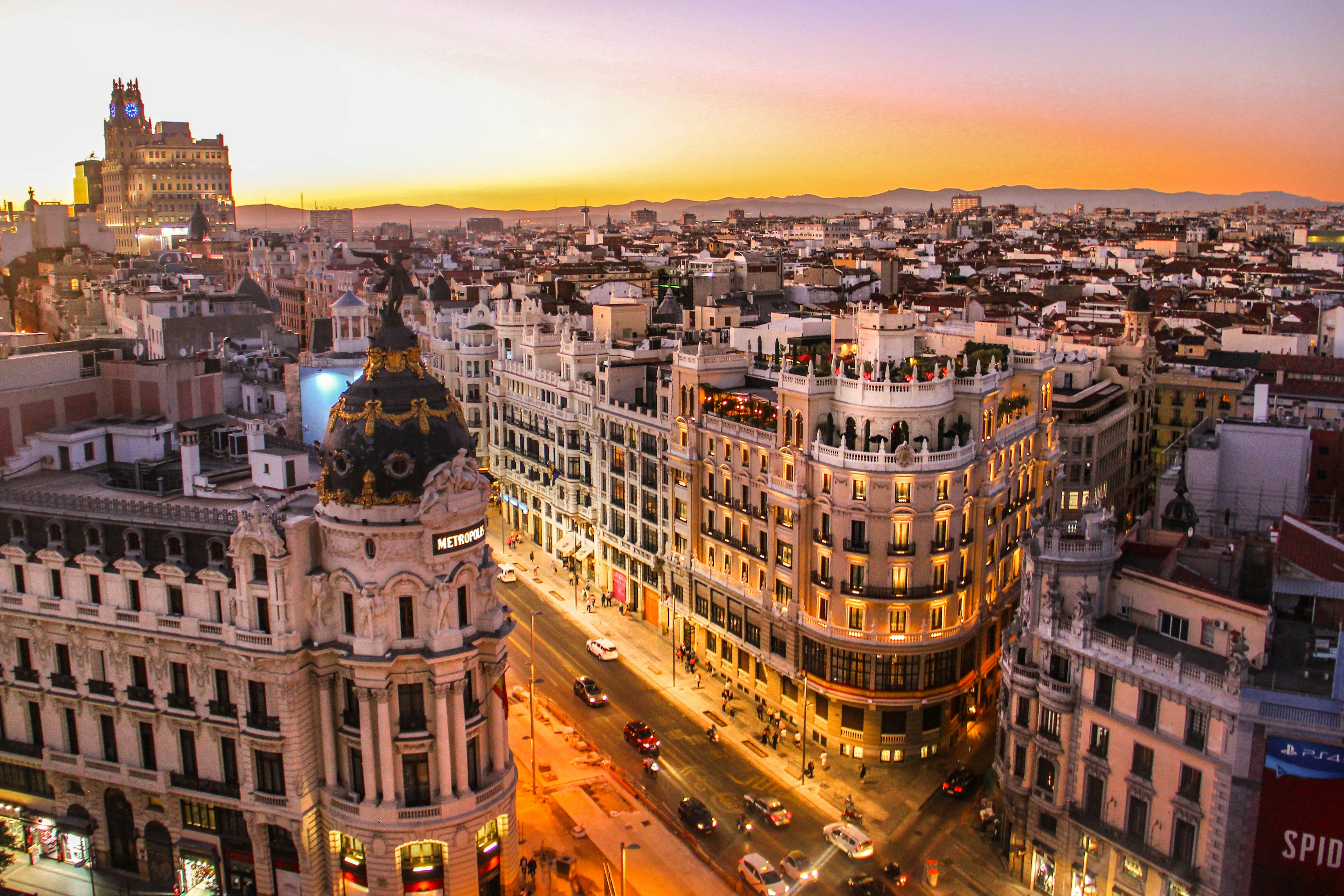
Madrid: Europe's Art Capital
Spain also has a lifestyle philosophy — the late lunches, the evening paseos, the two-hour dinners, the genuine joy in food — that's worth experiencing consciously rather than just as background to sightseeing.
Madrid's "Golden Triangle of Art" — three world-class museums within 500 metres of each other — constitutes the greatest concentration of European art outside the Vatican:
- Museo del Prado: The world's finest collection of Spanish and European Old Masters. Velázquez's Las Meninas, Goya's Black Paintings, El Greco, Titian, Rubens, Bosch — 8,000 works on display from a total collection of 20,000. Free 6–8pm Monday–Saturday and all day Sunday. Budget 3–4 hours minimum; 2 full days for serious engagement.
- Museo Reina Sofía: 20th-century Spanish art anchored by Picasso's Guernica — the most politically charged painting of the 20th century, painted in response to the 1937 bombing of a Basque town. The painting's physical scale (3.5m × 7.8m) and the intensity of its imagery are impossible to fully appreciate in reproduction. Free Tuesday–Saturday 7–9pm and Sunday 1:30–7pm.
- Museo Thyssen-Bornemisza: The Thyssen collection fills the gap between Prado and Reina Sofía — a private collection of 1,600 works spanning the 13th to 20th centuries, including exceptional Impressionist, German Expressionist, and American paintings not represented elsewhere in Madrid.
Beyond museums: the Mercado de San Miguel (covered market of extraordinary quality, Madrid's finest food hall for standing tapas and wine), the Retiro Park Sunday afternoon atmosphere, the flea market at El Rastro (every Sunday morning — Europe's largest, selling everything from genuine antiques to absolute junk in equal measure), and La Latina's maze of tapas bars from 8pm onwards are Madrid at its most authentically itself.
Barcelona: Architecture, Beach, and Creativity
Barcelona is the most visited city in Spain and one of the world's great urban experiences — a city that uniquely combines Mediterranean beach culture, world-class architecture, Michelin-starred cuisine, and a distinctive Catalan cultural identity that makes it feel like visiting a country within a country.
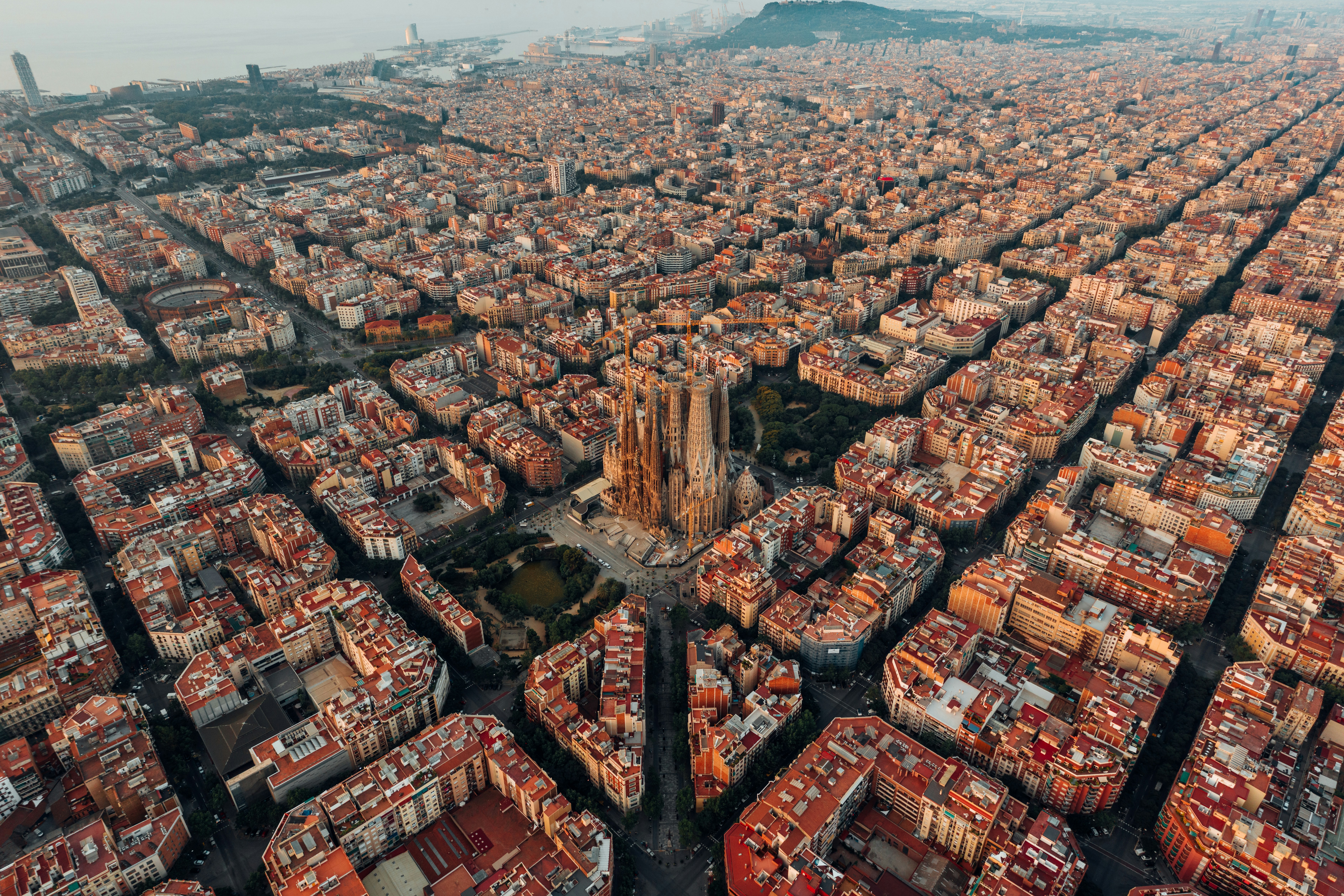
Gaudí's Barcelona
Antoni Gaudí's buildings are among the world's most visited architectural sites individually — collectively, they make Barcelona the most extraordinary outdoor architecture museum in existence. Book all tickets online weeks ahead during peak season — queues without advance booking at the Sagrada Família can exceed 3 hours:
- Sagrada Família: The unfinished basilica under continuous construction since 1882. Now 75% complete with a projected completion date of 2026–2030, the Sagrada Família combines Gothic structural logic with Art Nouveau decoration and organic forms that produce something impossible to categorize. The interior — designed so that the columns branch like a forest canopy to support the roof — is extraordinary. Entry €26 basic, €36 with tower access. Book weeks ahead.
- Park Güell: The terraced park above Barcelona with its mosaic dragon, Gaudí's gingerbread gatehouses, and the extraordinary sinuous mosaic bench overlooking the city. The Monumental Zone requires ticket purchase (€10); the rest of the park is free. Visit at 8am for the best light and fewest visitors.
- Casa Batlló and Casa Milà: Two Gaudí apartment buildings on the Passeig de Gràcia. Casa Batlló's bone-and-scales facade and Casa Milà's (La Pedrera) rooftop chimneys are among the Passeig's "Block of Discord" alongside Domènech i Montaner's Casa Lleó Morera — an entire city block of competing Modernisme masterpieces.
✈️ Book Your Spain Adventure
Find the cheapest flights to Madrid or Barcelona and book the best Spanish hotels.
✈ Search Flights 🏨 Book Hotels 🎫 Book ToursAndalusia: The Soul of Spain
Andalusia in southern Spain contains the country's most concentrated historical splendor — the legacy of 800 years of Moorish civilization visible in three extraordinary cities within 2 hours of each other by train:
Seville
Spain's most flamboyantly beautiful city — the Alcázar palace (still the official Spanish royal residence in Seville, UNESCO listed, Moorish architecture of breathtaking intricacy), the Gothic Cathedral with Columbus's tomb, the Barrio Santa Cruz's labyrinthine Jewish quarter, and the evening tapas culture that defines Andalusian food and social life. Seville is best experienced slowly: arrive at the Alcázar at opening, spend a long afternoon in Santa Cruz, eat tapas from 9pm at Bar El Rinconcillo (founded 1670, the oldest bar in Seville).
Granada and the Alhambra
The Alhambra palace complex above Granada is the most visited monument in Spain and one of the world's finest examples of Islamic architecture. The Nasrid Palaces — the ceremonial heart of the 13th–14th century Moorish kingdom — contain tilework, carved plaster, and water features of extraordinary refinement. The Generalife gardens above provide Granada's finest view of both the palace and the snow-capped Sierra Nevada beyond. Critical: Alhambra tickets must be booked online at least 2–3 months ahead for peak season (March–October). Day-of tickets are rarely available. Entry €18 for the complete complex.
Córdoba
The Mezquita-Catedral — the Great Mosque of Córdoba, built from the 8th century, converted to a cathedral in 1236 — is one of the world's most architecturally remarkable buildings. 856 columns of jasper, onyx, marble, and granite create a forest of striped red-and-white arches within a building that blends Islamic and Christian architecture in ways that neither tradition would have designed independently. The result is unique in world architecture. Visit early morning (9–10am) before tour groups arrive. Entry €13.

Spain's Food Culture
Spanish cuisine is one of the world's great food traditions — and its regional diversity rivals any country on earth. The Basque Country alone has more Michelin stars per capita than any other region in the world. Catalonia created the molecular gastronomy movement. Andalusia perfected the art of tapas. And every region protects its food identity with the fierce pride that makes a Valencian extremely specific about what constitutes a real paella.
- Tapas: The social institution of small plates, available free with drinks in Granada (one of very few cities in Spain that maintains this tradition) and at €1.50–€4 per piece everywhere else. The correct approach is standing at a bar, ordering drinks, eating 4–6 tapas, and moving to the next bar — the "tapeo" as a form of social choreography, not a meal format.
- Paella: A Valencian rice dish that exists in dozens of regional variations — the authentic Valencian version contains rabbit, chicken, and green beans (never seafood, which is the tourist-facing version). Eat paella at lunch (Spaniards never eat it at dinner), at a restaurant that makes it to order (minimum 30-minute wait), and never from a tray that's been sitting in a window display.
- Pintxos (San Sebastián): The Basque Country's version of tapas — elaborate constructions on bread (pintxo = spike, referring to the toothpick that holds them together), displayed at the bar and priced €1.50–€3 each. San Sebastián's Old Town bar crawl at 7–11pm is arguably Europe's finest food experience per square kilometre.
- Jamón Ibérico: Spanish cured ham from acorn-fed black Iberian pigs, aged 24–48 months, producing a fat-marbled, nutty, complex product that justifies its €80–€120/kg price point. The single best food purchase you can make in Spain — a 100g vacuum-packed slice travels home as an extraordinary souvenir.
Spain Budget Guide 2026
Spain sits in the middle range of European travel costs — significantly cheaper than France, Switzerland, or Scandinavia; more expensive than Portugal, Eastern Europe, or the Balkans:
- Budget traveler: €50–€75/day (hostel, supermarket lunch, menu del día dinner at €12–€15, metro/bus transport)
- Mid-range: €100–€160/day (3-star hotel, restaurants for most meals, museum entries)
- Comfortable: €200–€350/day (boutique hotel, fine dining, private tours)
The menú del día (set lunch menu) is Spain's finest budget institution — three courses including wine or water for €12–€15 at restaurants that charge €25–€40 at dinner for the same food. Eating the main meal at lunch is both culturally correct and significantly cheaper. Combine with our budget travel hacks and Spain becomes excellent value. Compare cheap flights to Madrid (MAD) and Barcelona (BCN) using our flight comparison guide — both airports are served by dozens of international carriers including multiple low-cost options.
Spain Transport Guide
Spain has the world's second-largest high-speed rail network (after China) — the AVE connects Madrid to Barcelona (2h 30m, €35–€80), Seville (2h 30m, €30–€70), Valencia (1h 40m), and Málaga (2h 15m). Book on Renfe's website at least 2–4 weeks ahead for significant savings over walk-up fares. The Madrid–Barcelona–Andalusia triangle is best covered entirely by train. A rental car is recommended for Andalusia's interior (rural villages between the three cities) and essential for exploring coastal regions beyond the city centres. See our car rental tips for Spain-specific rental advice including regional pickup strategies.
Spain's Wine Regions: Beyond Rioja
Spain is the world's largest wine-producing country by vineyard area — and its wine diversity extends far beyond the internationally familiar Rioja. The following regions reward wine-focused travel with extraordinary quality and dramatically lower prices than equivalent French or Italian wines:
- Ribera del Duero: Tempranillo-based reds of Bordeaux-comparable complexity from the high-altitude Castilian plateau. Vega Sicilia's Único (Spain's most celebrated wine) comes from here; dozens of excellent smaller producers offer cellar visits for €10–€20 including tastings.
- Priorat (Catalonia): Grenache and Carignan from ancient vines growing in the region's characteristic black slate (llicorella) produce wines of extraordinary mineral intensity. The village of Gratallops and the Montsant appellation adjacent to it form one of Spain's most beautiful wine landscapes.
- Sherry Triangle (Andalusia): Jerez de la Frontera, Sanlúcar de Barrameda, and El Puerto de Santa María produce the world's most misunderstood wine — fino sherry, chilled and freshly poured from the barrel, is one of Spain's finest food-wine pairings with jamón, olives, and fresh almonds. González Byass and Lustau offer exceptional cellar tours.
- Txakoli (Basque Country): The Basque Country's own DO — a low-alcohol, lightly sparkling white wine poured from height into a wide glass to create a light effervescence. The only correct accompaniment to pintxos bar hopping in San Sebastián's Old Town.
San Sebastián: The World's Best Food City Per Capita
San Sebastián (Donostia in Basque) is a city of 180,000 people with the world's second-highest concentration of Michelin stars per capita (after Kyoto). The Old Town (Parte Vieja) bar circuit — dozens of cramped pintxos bars each producing 10–20 different elaborate small plates, most €2–€3 each — provides an evening of extraordinary eating for €20–€30 total per person if you're disciplined about moving between bars rather than lingering at one.
The three-star restaurants (Arzak, Mugaritz, Akelarre) represent the apex of Basque cuisine's contemporary evolution — reservation required months ahead, tasting menus €200–€350 per person. But the Parte Vieja pintxos circuit is arguably the more characteristically San Sebastián experience: informal, convivial, and producing food that regularly exceeds the technical standard of formal restaurants at 5% of the cost. Apply our food travel guide for detailed San Sebastián bar recommendations by neighbourhood.
The Camino de Santiago: Spain's Greatest Walk
The Camino de Santiago — the network of ancient pilgrimage routes converging on the Cathedral of Santiago de Compostela in Galicia — has experienced a dramatic resurgence in the 21st century, attracting 400,000+ walkers annually from every country and spiritual background. The Camino's appeal is not exclusively religious: the combination of daily physical challenge, temporary community with fellow walkers, the simplification of daily life to walking, eating, and sleeping, and the extraordinary landscape of northern Spain create an experience of unusual psychological depth.
The most popular route — the Camino Francés (French Way) from St Jean Pied de Port to Santiago de Compostela, 790km, typically 30–35 days — crosses the Pyrenees on Day 1 and passes through the wine towns of La Rioja, the Meseta's high plains, and the green valleys of Galicia. The Camino Portugués (10–14 days from Porto) is the fastest-growing alternative — the Portuguese landscape and coastal stages (Camino da Costa variant) provide a different and equally rewarding experience. Budget: €30–€50/day including albergue (pilgrim hostel, €10–€15) meals and incidental costs.
Book flights to Biarritz or Pamplona for the Francés route using our flight savings guide — the Camino's flexibility means you can fly in and out of different cities, making open-jaw flights (Biarritz in, Santiago out) a natural itinerary structure.
Frequently Asked Questions About Spain Travel
What is the best time to visit Spain?
March–May and September–October offer the best combination of weather, crowds, and value. Avoid inland Andalusia in July–August (extreme heat). Canary Islands are excellent year-round.
Do I need to book the Alhambra in advance?
Yes — book online at least 2–3 months ahead for March–October visits. Day-of tickets are almost never available in peak season. The Sagrada Família in Barcelona and several Madrid museums also benefit from advance booking during summer.
What is Spain most famous for food-wise?
Tapas, paella (Valencian), jamón ibérico, churros, pintxos (Basque), tortilla española, and seafood dishes like pulpo a la gallega (Galician octopus). The Basque Country has the world's highest concentration of Michelin stars per capita.
Is it safe to travel to Spain in 2026?
Yes — Spain is one of Europe's safest countries for tourists. Standard city awareness applies for pickpocketing in Barcelona's La Rambla and Madrid's metro. Terrorism risk is assessed as the same as any major Western European country. Review our travel safety guide for general international travel security advice.