Mexico City surprised me more completely than any destination I've visited in the past decade. I expected chaos and got unexpected elegance. I expected one cuisine and found twenty regional ones. I expected a city you rush through on the way somewhere else and found myself extending my stay twice. CDMX, as the locals call it, is one of the great underrated world cities.
When to Visit Mexico City
Mexico City sits at 2,250 metres altitude on a plateau — the climate is mild and spring-like year-round (15–25°C), making it one of the world's most comfortable major cities in which to travel regardless of month. Considerations by season:
- November–April (Dry Season): Optimal visibility and weather. The famous "golden hour" light over the historic centre is at its clearest. Day of the Dead (November 1–2) is Mexico City's most atmospheric cultural event — extraordinary processional traditions, altar installations throughout the city, and the Mixquic neighbourhood's famous multi-day candlelit ceremonies.
- May–October (Rainy Season): Afternoon showers (typically 4–6pm, 30–60 minutes) cool the city without significantly disrupting daily life. Lush greenery and dramatically lower hotel rates make this an excellent value window.
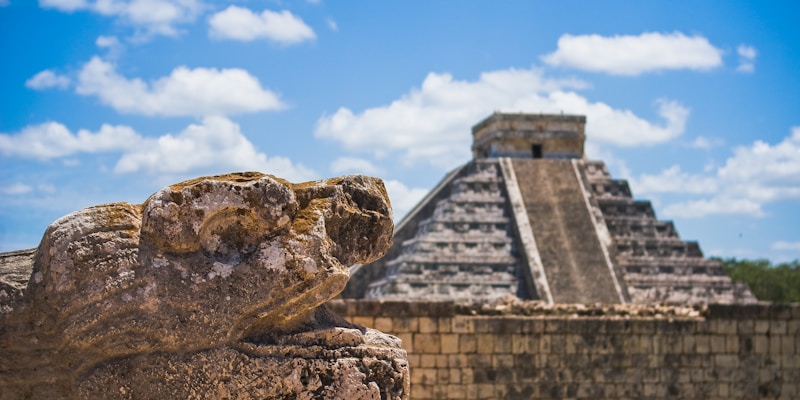
Mexico City's Essential Experiences
The safety reputation puts people off. The reality in 2026 is that the tourist areas of Mexico City are as safe as any major European city — and the culture, food, art, and neighbourhoods are extraordinary. Don't let an outdated reputation stop you.
Historic Centre (Centro Histórico)
Mexico City's historic centre contains more historical layers per square metre than almost anywhere on earth. The Zócalo (Constitution Square) is one of the world's largest city squares, anchored by the Metropolitan Cathedral (begun 1573, incorporating Aztec stonework) and the Palacio Nacional (Diego Rivera's famous murals depicting all of Mexican history span an entire floor). The Templo Mayor — the main Aztec temple of Tenochtitlán (the city that became Mexico City after the Spanish conquest in 1521) — was discovered beneath the colonial city centre in 1978 and is now partially excavated, allowing visitors to walk alongside pyramid structures built by successive Aztec emperors. Entry: $10. Allow 3 hours minimum.
Teotihuacán
50km northeast of Mexico City, Teotihuacán is the largest pre-Columbian city in the Americas — built between the 1st and 7th centuries CE by an unknown civilisation that predated the Aztecs. The Pyramid of the Sun (the third largest pyramid in the world) and Pyramid of the Moon flank the 2km Avenue of the Dead processional way. The site's scale, its mysterious civilisation, and the view from the Pyramid of the Sun's summit over the entire ancient city create one of the Americas' most powerful archaeological experiences. Day trip from Mexico City: 1.5h by Metro + bus ($3) or direct bus from Terminal Norte ($5). Arrive at opening time (8am) to beat the midday heat and tour groups. Book through our tours page for guided visits that include lesser-visited areas.
Frida Kahlo Museum (La Casa Azul)
The Blue House in Coyoacán where Frida Kahlo was born, lived, and died is among the world's most emotionally resonant artist homes — every room preserved as it was during her lifetime, including her paints, bed (where she worked for years during her recovery), pre-Colombian figurine collection, and the corsets and prosthetic leg that became elements of her extraordinary self-portraiture. Book tickets at museofridakahlo.org.mx weeks ahead — it sells out daily. The Coyoacán neighbourhood itself (bohemian, colonial, café-lined cobblestone streets) rewards an afternoon independently.
✈️ Fly to Mexico City
Find cheap flights to CDMX and book the best hotels in the city's finest neighbourhoods.
✈ Search Flights 🏨 Book Hotels 🎫 Book ToursChapultepec and Polanco
Bosque de Chapultepec — at 686 hectares, one of the largest urban parks in the Western Hemisphere — contains Mexico's most important museum: the National Museum of Anthropology, whose collection of Aztec, Maya, Olmec, and other Mesoamerican cultures is the finest in the world. The Sun Stone (the famous "Aztec calendar"), the reconstructed Teotihuacán murals, and the Maya room's extraordinary jade funeral masks are each individually worth the $5 entry price. Allow 4–5 hours minimum; the full collection requires multiple visits. Adjacent Polanco provides Mexico City's finest dining — Quintonil, Pujol (consistently in World's 50 Best), and dozens of genuinely excellent restaurants making Polanco one of the Americas' finest restaurant districts.
Mexico City Food: The World's Best Urban Food Culture
Mexico City's street food culture is UNESCO-protected and entirely deserving of the designation — the specificity, quality, and regional diversity of what appears on CDMX street corners is extraordinary:
- Tacos al Pastor: The defining Mexico City taco — pork marinated in chilli and achiote, cooked on a vertical spit (trompo) with pineapple at the top, carved directly into corn tortillas. El Huequito (since 1959 in Centro), El Vilsito (in a garage workshop in Narvarte), and La Hija de Los Apaches near La Merced are three of the most consistently cited practitioners.
- Tlayudas: Large oval tortillas (Oaxacan origin) with black beans, quesillo cheese, and various toppings. Mexico City's large Oaxacan community has made tlayudas a city staple.
- Churros and chocolate: The Churrería El Moro (5 locations, open 24 hours) has been serving freshly-fried churros with thick drinking chocolate since 1935. At 3am after a night in Condesa's bars, or at 8am before the historic centre opens, it is equally correct.
- Mercado Medellín: The daily market in Colonia Roma where Colombia community's food traditions meet Oaxacan, Veracruz, and Mexico City cuisines in one of the city's best market lunch environments.
Our world food capitals guide rates Mexico City in the global top 5 — the combination of ancient culinary traditions, regional diversity, and contemporary innovation makes CDMX the Americas' unambiguous culinary capital.

Mexico City Budget Guide
- Budget: $30–$50/day (guesthouse, street food, Metro transport)
- Mid-range: $70–$120/day (boutique hotel, restaurant meals, museum entry)
- Comfortable: $150–$300/day (design hotel, fine dining, private tours)
Mexico City is one of the world's great value major cities — the combination of exceptional food at street prices, world-class free and low-cost museums, and boutique hotel quality at Latin American pricing makes it arguably the world's best value city break destination for culturally curious travelers. Use our vacation package guide for combined flight and hotel deals, and our budget hacks for the most efficient CDMX spending strategies.
Mexico City Art and Culture
Mexico City's art scene operates at a scale that rivals New York, Paris, and London — a consequence of the city's position as the Americas' largest metropolis and the heir to one of history's richest visual art traditions. The muralist movement (Diego Rivera, José Clemente Orozco, David Alfaro Siqueiros) produced public art of extraordinary scale and ambition in the 1920s–1950s, much of which remains in Mexico City's public buildings:
Diego Rivera's murals in the Palacio Nacional depict 2,000 years of Mexican history across three floors of staircase walls — a task that occupied Rivera for 25 years. The detail, the political commentary, and the sheer scale (over 4,500 sq ft) make them the most significant painted works in the Americas. Adjacent to the Zócalo, free entry. Rivera and Frida Kahlo's shared studio in San Ángel (Museo Casa Estudio Diego Rivera y Frida Kahlo, Tuesday–Sunday, $5) provides the most intimate view of their professional and personal life.

The Museo Tamayo (Tamayo Museum of Contemporary Art, free Sunday) in Chapultepec houses Rufino Tamayo's personal collection of international contemporary art alongside rotating exhibitions. The Sala de Arte Público Siqueiros — the final studio of muralist David Alfaro Siqueiros — contains his unfinished monumental work "The March of Humanity" across 2,400 sq ft of three-dimensional surfaces. The Roma and Condesa neighbourhoods' gallery district provides the most accessible introduction to contemporary Mexican art through dozens of commercial galleries that welcome visitors with or without purchase intentions.
Mexico City Neighbourhoods Worth Exploring
Colonia Roma: Mexico City's most creative neighbourhood — Art Nouveau and Neoclassical architecture, independent bookshops, natural wine bars, specialty coffee, and what many food critics consider the highest restaurant quality per block ratio in Latin America. The Jardín Pushkin and Jardín Dr Ignacio Morones are excellent morning café stops. Roma Norte and Roma Sur have slightly different characters — Norte is livelier; Sur is more residential and gentler.
Colonia Condesa: Roma's twin — similarly tree-lined, café-dense, and architecturally beautiful, with a higher concentration of international residents (and consequently more multilingual menus). The Parque México is one of Latin America's finest urban parks — Art Deco fountains, mature ash trees, and the Hipódromo's dog-walkers, yoga practitioners, and weekend families create a quality of urban green space that Mexico City's reputation doesn't prepare visitors for.
Coyoacán: The colonial village neighbourhood that absorbed into the city in the 20th century — León Trotsky's house (where he was assassinated in 1940, now a museum), Frida Kahlo's Blue House, the Sunday artisan market, and Café El Jarocho's legendary café de olla (coffee brewed in a clay pot with cinnamon and piloncillo) create a neighbourhood of concentrated historical and cultural interest.
Xochimilco: Ancient Aztec floating garden neighbourhood accessible by Metro — the chinampas (artificial floating islands built on the lake that once covered the Valley of Mexico) are navigated by trajinera (flat-bottomed decorated boat) with mariachi bands performing alongside while vendors sell food and drinks from water-level stalls. Particularly atmospheric on Sundays when local families use the canals for celebration lunches. Metro Tasqueña + tram to the embarcadero.

Getting Around Mexico City
Mexico City's transport system is comprehensive and very affordable:
- Metro (Sistema de Transporte Colectivo): 12 lines, 195 stations, MXN$6 ($0.30) per ride — one of the world's cheapest metro systems per journey. Connections to all major tourist areas. Can be extremely crowded during rush hours (7–9am, 6–8pm). Women-only carriages at the front of each train during peak hours.
- Metrobús: Bus Rapid Transit on dedicated lanes, MXN$6 ($0.30) per trip. Covers major north-south corridors including Insurgentes (from Indios Verdes to San Ángel).
- Uber/DiDi: Ubiquitous, affordable ($2–$6 for most tourist zone trips), and significantly safer than street taxis for visitors unfamiliar with the city. Share your trip via the app with a contact.
- Ecobici (bike share): 30-minute trips, MXN$117/24h pass for unlimited rides. Excellent for the flat, wide boulevards of Roma, Condesa, and Polanco.
Apply our travel apps guide for Mexico City-specific apps including Google Maps offline download (essential — cellular data occasionally drops in underground Metro sections).
✈️ Book Your Mexico City Adventure
Find cheap flights to CDMX and explore one of the world's greatest cities.
✈ Search Flights 🏨 Book HotelsDay Trips from Mexico City
Mexico City's position in the central Mexican highlands makes it an excellent base for day trips to some of Mexico's most extraordinary destinations:
Puebla (2h by bus, $8): Mexico's fourth-largest city and culinary capital — the birthplace of mole poblano (the complex chile-chocolate sauce that is Mexico's most internationally recognised dish) and chiles en nogada (stuffed chiles in walnut cream sauce, served in colours of the Mexican flag during August–September independence season). The historic centre's Talavera tile-decorated facades, the enormous Zócalo cathedral (largest in Mexico, construction began 1575), and the Mercado de Artesanías' textile collection make Puebla a full-day destination. The Cholula archaeological zone — a pyramid larger in volume than Egypt's Great Pyramid of Giza, now capped with a Spanish colonial church — is 15 minutes from Puebla by bus. Book through our tours page for verified guided day tours.
Cuernavaca (1.5h by bus, $5): "The city of eternal spring" — 1,500m altitude provides pleasant climate year-round. The Palacio de Cortés (Hernán Cortés' palace, now a history museum with Diego Rivera murals) and the extraordinary Jardin Borda (18th-century botanical garden) reward a half-day.
Taxco (3h by bus, $10): Silver mining town of extraordinary colonial beauty — steep cobblestone streets, the baroque Santa Prisca church (1751, built by a silver magnate in thanksgiving), and 300+ silver shops selling jewellery at workshop prices. The town is perched on a hillside so dramatic that its street plan uses stairs as transport routes. Stay overnight to experience the town after day-trippers depart.
Mexico City Safety: A Practical Update for 2026
Mexico City's safety situation for tourists in the main visitor neighbourhoods (Roma, Condesa, Polanco, Coyoacán, Centro Histórico) remains good in 2026. The city's tourist infrastructure is sophisticated, the police presence in tourist areas is visible, and the vast majority of visitors report trouble-free experiences. Practical current advice:
- Use Uber or DiDi exclusively: Street taxis ("libre" cabs) in Mexico City have been the source of the vast majority of serious tourist crime incidents. App-based transport eliminates this risk entirely — always confirm the car model and plate before entering.
- Be discreet with electronics: CDMX is a large city and opportunistic phone theft (particularly from hands while walking or at outdoor café tables) is common in crowded areas. Keep phones in pockets when not in active use; be aware of your surroundings when using phones on the street.
- ATM safety: Use ATMs inside bank branches or major shopping malls during business hours. HSBC, Santander, and BBVA branches in tourist areas provide the safest withdrawal environment.
- Altitude adjustment: Mexico City at 2,250m causes mild altitude symptoms (headache, breathlessness on stairs, appetite reduction) for some visitors arriving from sea level. Rest on the first day, drink extra water, and avoid alcohol for 24 hours. Most visitors adjust within 24–48 hours. See our travel safety guide for altitude management advice.
✈️ Book Your Mexico City Trip
Find cheap flights to CDMX and book hotels in Roma, Condesa, or Polanco.
✈ Search Flights 🏨 Book HotelsFrequently Asked Questions About Mexico City
Is Mexico City safe for tourists?
Yes, in the main tourist neighbourhoods (Roma, Condesa, Polanco, Coyoacán, Centro Histórico). Use Uber, stay aware in markets and crowded areas, and avoid certain outlying districts. The travel safety guide covers Mexico City-specific precautions.
What is the best neighbourhood to stay in Mexico City?
Colonia Roma and Condesa provide the best combination of boutique hotels, excellent restaurants, walkability, and access to the city's cultural attractions. Polanco is the most upscale option; the Historic Centre provides the most immersive historical experience at lower prices.
How do I get around Mexico City?
The Mexico City Metro (one of the world's largest, $0.25 per ride) is fast and covers major tourist areas. Uber is safe, cheap ($2–$5 for most city trips), and recommended over street taxis. Walking is excellent in Roma, Condesa, Coyoacán, and the Historic Centre.